- Home
- The eight jobs
- Ice Dams
Ice at the eaves with a damp ceiling or wall
Ice Dams on North Arlington Roofs
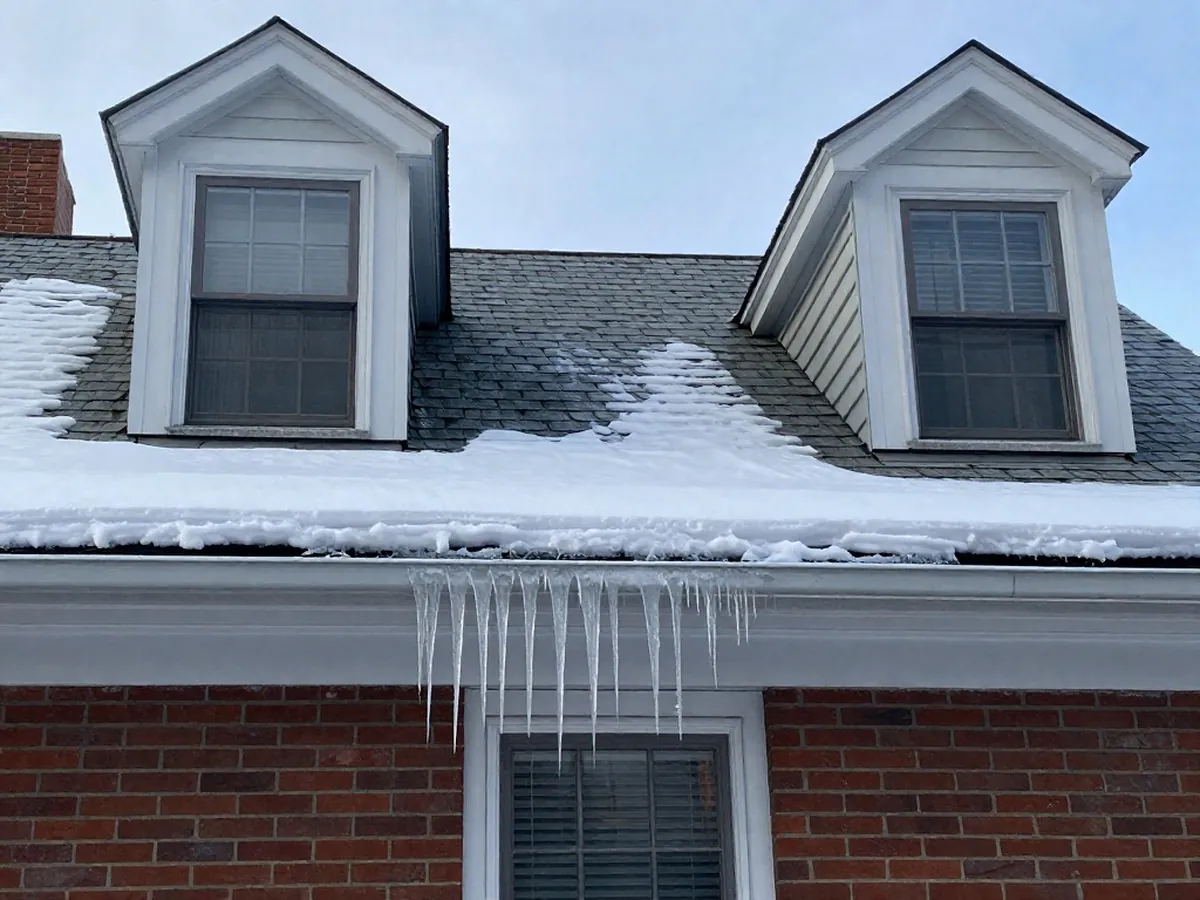
Is there a ridge of ice along the eaves, with a damp patch on the ceiling or the wall beneath? Call __PHONE_DISPLAY__ with where the ice sits, how long it has been there and where the stain shows, and a roofer can come out to look at the eaves and the attic side.
When it cannot wait
Ice on the eave, water in the wall
An ice dam needs three things: snow on the roof, heat leaking up from the house, and a cold eave. Melt from the warm part of the roof refreezes at the edge, backs up behind the ice and finds its way under the shingles. UMass's building-science group says one or two inches of snow can be enough.
Once the water reaches a ceiling or wall, dial __PHONE_DISPLAY__ and say where the ice sits along the eave. Insulation that has gotten damp needs a look before the next freeze.
What the work involves
The cure is usually in the attic
The lasting answer to an ice dam is rarely at the eave. UMass's building-science group points to air sealing, insulation and ventilation in the attic, and notes that heat cable does not address the cause and that gutters do not create the dam.
The Building America guide adds the roofing side: self-adhering membranes around eaves, valleys, dormers and chimney penetrations.
Stop and get help first if
- Meltwater is coming through a ceiling fixture: leave the room, leave the switch alone, and call 911 from a dry spot.
- Heavy icicles hang above an entry or a walk: block off the spot below, and leave them alone instead of knocking them down from a ladder.
- The plan for the ice involves a ladder, a roof rake or a shovel on an icy roof: do not climb up, and keep anyone off the ground below the eave.
- Inside, a ceiling bellies out or a wall runs with water: clear everyone from beneath it, and call 911 at the first sign of plaster or board coming down.
Close to home
Teterboro Airport's 1991-2020 normals average January at 32.8 degrees. In a typical January the low reaches 32 or colder on 23.6 days, and the high stays at 32 or colder on 7.7. The difference, about 16 days, is the freeze-at-night, thaw-by-afternoon stretch (derived by subtraction) that feeds an ice dam.
The National Weather Service's Newark almanacs for 1991-2020 give a mean January snowfall of 9.1 inches and February's at 10.1. Newark is the station those almanacs cover, so snow on one North Arlington street can differ, but UMass notes that an ice dam can form under as little as 1 to 2 inches.
What moves the price
What separates a thaw job from a winter job
Removing ice with care is labor by the hour, and the price follows the size of the dam and how far the ice reaches. The work that stops the next one is different: sealing air leaks at the attic floor, adding insulation, improving ventilation and, on a reroof, laying a self-adhering membrane along the eaves. Those are separate line items, and the first two may belong to a different trade from the roofer.
Ask who is quoting what.
Paperwork pointer
Ice barrier and the state code
The state's ice barrier bulletin of June 2015 applies its requirement where the January average falls to 25 degrees or colder; its New Jersey entry is Sussex County. Since the bulletin was issued before the 2024 edition was adopted, ask the town office what applies now. The rules page has the details and the offices: the local rules page.
Pairs with
Chimney and Flashing
Gaps, stains and loose metal around the brick
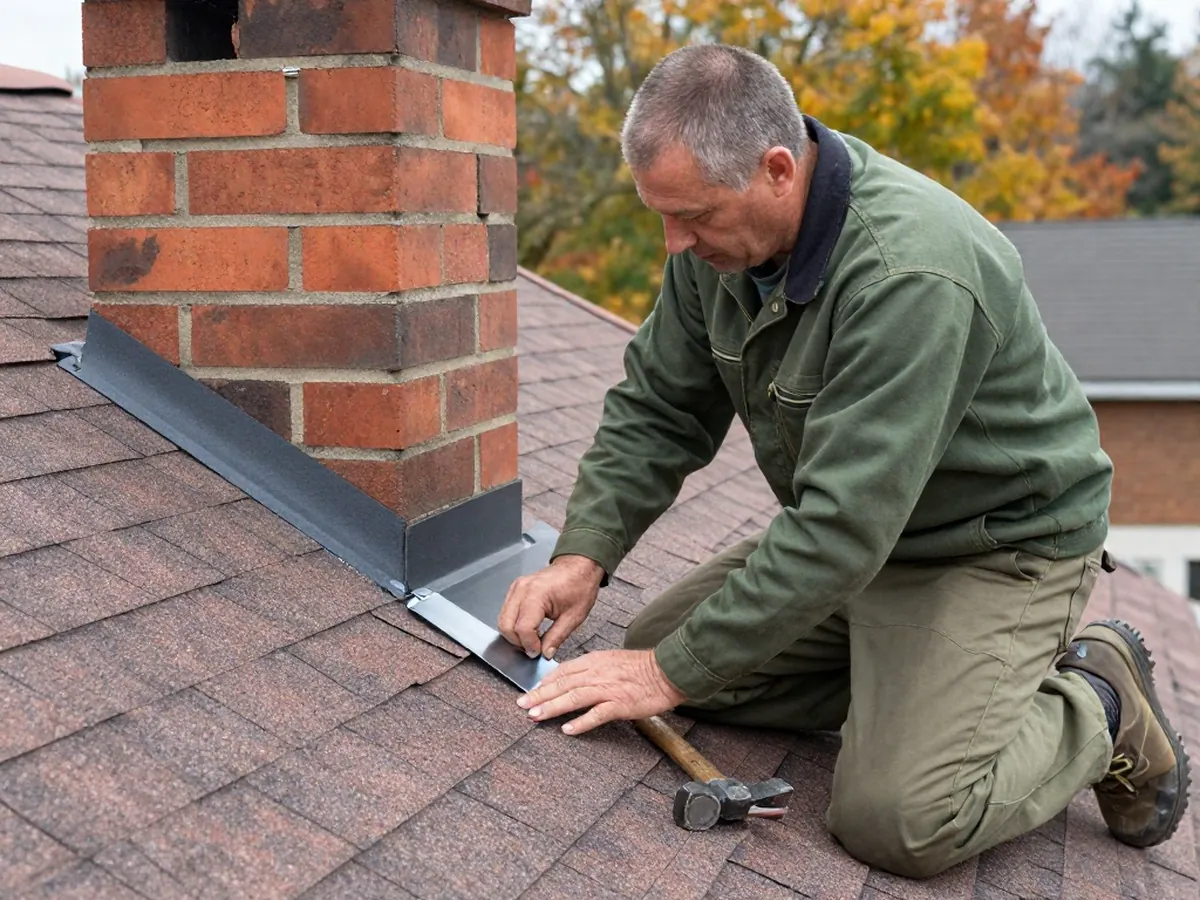
Is there a brown mark on the wall by the chimney, or a gap where the brick meets the shingles?
Open chimney and flashingWhere the facts come from (7)
- UMass Amherst Building and Construction Technology, Preventing ice dams
- Building America Solution Center (PNNL), Construct roofs and attics for ice dam prevention
- NJ Division of Codes and Standards, Bulletin 07-3, Ice Dam Membrane/Ice Barrier (rev. June 2015)
- NOAA NCEI, 1991-2020 monthly climate normals, Teterboro Airport, NJ (station USW00094741)
- National Weather Service New York, Newark January almanac (1991-2020 normals)
- National Weather Service New York, Newark February almanac (1991-2020 normals)
- NIOSH, Ladder safety (CDC archive)
Checked 1 Nov 2026